



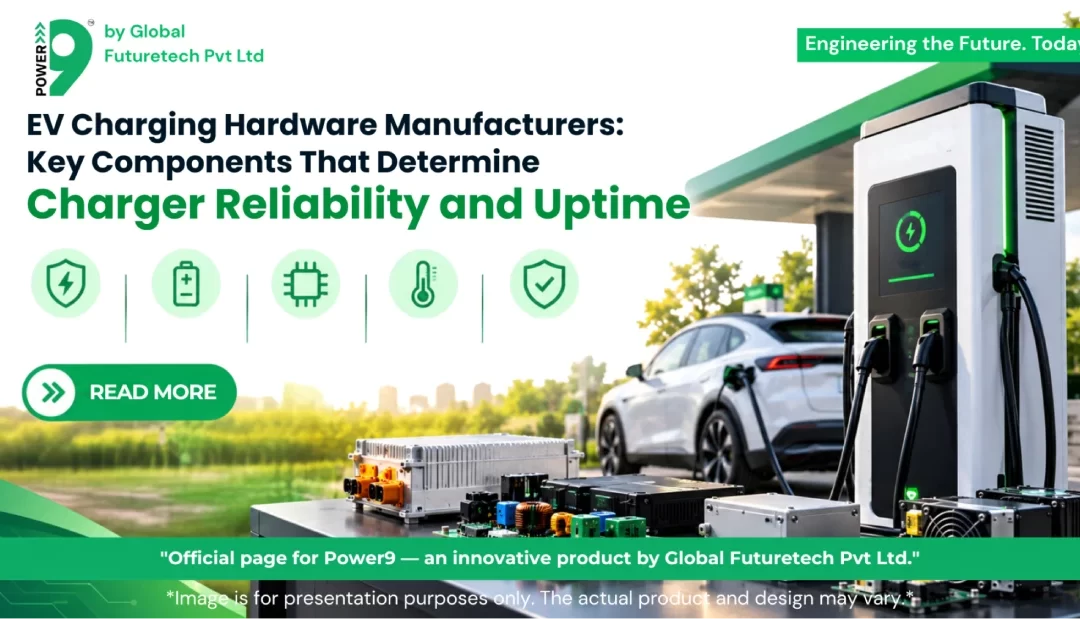
An EV charger may appear very simple from the outside. We see a housing, display, charge cable, connector which may also include an RFID reader. What we don’t see is the engineering that goes on inside.
In a commercial charger you will find switching devices, protection systems, sensors, control electronics, communication hardware, metering, firmware and thermal management components. DC fast chargers add yet another layer of complexity.: High efficiency power conversion.
In the comparison of EV charging hardware manufacturers, what we see is that which goes into the make up of the product’s internal design is of greater importance than its look or feature set. A fleet operator isn’t just concerned with performance during a demo.
They need a consistent system that runs every day without issues. A commercial charging service is looking for which can quickly identify problems and also have short repair times when things break. A workplace needs chargers that are always available around the clock and do not become a maintenance nightmare that brings the whole system down.
That is why professional procurement groups should look at the design of theEV charging system manufacturer’s architecture, not just the charger’s capacity.
India is seeing growth in its charging infrastructure. The Ministry of Heavy Industries reported 52,718 public charging stations as of 21 July 2026, including 16,561 public stations equipped with fast EV chargers for cars. Also the Government has put out an allocation of ₹2,000 crore into PM E-DRIVE for public charging infrastructure.
As more charging ports are introduced into the market, charger up time is a commercial issue as opposed to a technical one.
So what actually makes one charger more reliable than another?
The answer lies in how well its individual components have been selected, integrated, cooled, protected, controlled, tested and supported.
Quick Answer: What Determines EV Charger Reliability?
Reliable EV charge solutions are a result of a full hardware and software set up. As a buyer looking at what EV charging hardware manufacturers have to offer you should look into power electronics, contactors, voltage and current sensors, controllers, electrical protection, charge cables, connectors, thermal management, communication modules, case design, firmware, manufacturing quality control and spare parts availability.
Also the best EV charging system manufacturers will have put in place what it takes to diagnose and service their equipment. While we all want to prevent failures from happening, it is also very important to reduce the down time when a fault does occur.
Why Hardware Reliability Matters for B2B EV Charging
For an individual EV owner, a charger fault can be frustrating.
For a commercial fleet, that same failure can become an operational problem.
In a depot which has five vehicles that depend on one charging unit before the morning shift goes out. Should the charge point go down for a few hours that issue may in turn affect vehicle dispatch, driver scheduling and business operations.
For a charging-network operator, downtime can mean:
lost charging sessions,
customer complaints,
lower station utilisation,
maintenance visits,
and lost revenue.
Ministry of Power’s 2024 EV charging infrastructure guidelines are put forth to enable safe, reliable and accessible charging infrastructure across India.
This is why consumers should expect more from EV charging hardware manufacturers of:.
“What is the price?”
The better discussion is:
“How has this charger been engineered for reliability, and how quickly can it be returned to service when something fails?”
AC and DC Charging Hardware Are Fundamentally Different
Before comparing components, buyers need to understand that AC and DC charging equipment have different electrical architectures.
AC Charging Hardware
With AC charging, AC electricity is supplied to the vehicle, while the vehicle’s onboard charger performs the main AC-to-DC conversion needed by the battery.
An AC charging unit can still contain important systems for:
electrical switching,
protection,
metering,
vehicle communication,
authentication,
connectivity,
load management,
and user control.
For EV charging hardware manufacturers, the engineering challenge is to manage these functions reliably while matching the intended vehicle and site environment.
DC Fast Charging Hardware
A DC fast charger performs the power conversion within the charger itself.
This in turn includes large scale power electronics, DC switching, current and voltage measurement, cooling systems, insulation related protection and more complex in-vehicle communication.
BIS’s current IS 17017 (Part 23):2026 the Bureau of Indian Standards addressed issues related to Electric Vehicle Supply Equipment which included requirements for charging functions, digital communication, electric shock protection, cable assemblies, over and short circuit protection and emergency breakers.
As charger power and system complexity grow the engineering burden for EV charging system manufacturers does so also.
1. Power Conversion Modules

For DC chargers, power electronics sit at the heart of the system.
These modules convert incoming electrical power into controlled DC output for the vehicle.
When comparing EV charging hardware manufacturers, buyers should not simply ask:
“Is this a 30 kW charger?”
They should also understand how the power architecture is built.
Useful questions include:
What is the module configuration?
Can individual power modules be replaced?
What happens if one module develops a fault?
How is heat removed from the power stage?
Does the charger derate under certain conditions?
Are compatible replacement modules available?
For large scale fleets or charging networks a modular architecture may improve field service ease in that a technician can replace a single faulty part instead of whole power systems.
As it stands though modularity itself is no guarantee of success. Still required are quality electrical design, thermal management and control.
2. Contactors and Switching Devices
Contactors control high-power electrical paths inside charging equipment.
They may switch during:
charger startup,
vehicle connection,
normal charging,
session termination,
and fault response.
These components can experience repeated electrical and mechanical stress.
Professional EV charging system manufacturers have to choose switching devices that are right for the charger’s voltage, current, switching duty and environmental conditions.
For procurement teams the primary issue is not which brand of contactor is used.
A better question is:
How have the switching components been rated for the charger’s actual operating duty?
This reveals whether the manufacturer is thinking at system level rather than simply assembling a bill of materials.
3. Voltage and Current Measurement
A charger needs accurate information about what is happening electrically.
Voltage and current sensing can influence:
power regulation,
charging control,
fault detection,
metering,
display information,
and backend reporting.
This is a key element of evaluating EV charging hardware manufacturers. are putting out.
What they report that the charge point does for anomaly detection and if those are recorded in fault logs.
In the case of connected charging infrastructure what we also see is that it is useful to know if authorized technical teams are able to access that info remotely.
A sensor may put in for a small price in comparison to the full charger, but poor performance may bring the whole system down.
4. Charger Controller and Control Board
If power electronics are the muscles of the charger, the controller is closer to the decision-making system.
It can coordinate:
charging sequences,
contactors,
vehicle communication,
authentication,
fault responses,
display behaviour,
connectivity,
and session termination.
For this reason, the controller is a critical area when comparing EV charging system manufacturers.
Businesses should ask:
Who develops the firmware?
How are firmware releases controlled?
Can faults be logged?
Can technical teams retrieve diagnostics?
Can firmware be updated remotely?
How are failed updates handled?
Modern EV chargers today are not what we think of as pure electrical devices. They are in fact hardware and software combined.
Hardware quality can be excellent while unstable control software still creates downtime.
5. Electrical Protection Architecture
A charger works with meaningful electrical power, so protection cannot be treated as a marketing checkbox.
Depending on product architecture, the charging system may need to respond to abnormal conditions involving:
over-voltage,
under-voltage,
over-current,
short circuit,
over-temperature,
earth leakage,
insulation faults,
surge events,
or emergency-stop conditions.
The present BIS DC EVSE standard includes in detail what is to be done in the case of electric shock, overloads, short circuits, emergency disconnection and related safety issues.
When interviewing EV charging hardware manufacturers, avoid asking only:
“Do you have over-voltage protection?”
Ask:
“What happens when an over-voltage fault actually occurs?”
A technically credible answer should explain detection, charger response, user indication and diagnostic logging.
This gives buyers much more useful information.
6. Charging Cable and Connector
The charging connector is one of the most frequently handled physical components on the charger.
It may experience:
repeated insertion and removal,
cable pulling,
drops,
environmental exposure,
heat,
and everyday user handling.
For commercial sites, cable and connector durability can have a direct effect on charger uptime.
Businesses comparing EV charging system manufacturers should check:
connector type,
cable current rating,
cable length,
strain relief,
connector storage,
replacement procedure,
and spare-part availability.
The present BIS DC EVSE standard includes in detail what is to be done in the case of electric shock, overloads, short circuits, emergency disconnection and related safety issues.
For high-utilisation charging locations, the cable assembly should therefore be viewed as a service-critical component.
7. Thermal Management

Heat is one of the most important enemies of power electronics.
A charger can have high-quality electrical components and still suffer reliability problems if heat is poorly managed.
Good EV charging hardware manufacturers therefore design around:
airflow,
heat sinks,
fans,
temperature sensors,
component placement,
and controlled power derating.
Ask:
Where is temperature monitored?
What happens when internal temperature rises?
Does charging power reduce?
What happens if a fan fails?
Can cooling components be replaced onsite?
What maintenance do filters or fans require?
This is particularly relevant for India.
In IS 17017 Part 23:2026 raises the ambient test temperature for DC EVSE to 55°C, which is an increase from 40°C in the IEC document and is a change which has been made to better suit Indian conditions.
For EV charging system manufacturers, we see that thermal engineering is a very important issue.
8. Charger Enclosure
The enclosure does more than make the charger look finished.
It affects:
environmental protection,
cooling,
service access,
physical durability,
cable entry,
and internal component arrangement.
When it comes to the evaluation of EV charging hardware manufacturers, look at what they claim for the enclosure rating in relation to the actual installation setting.
An indoor parking garage and an exposed outdoor charging station put forth different issues.
Review the charger’s:
IP rating,
IK rating where specified,
operating temperature,
material,
service access,
ventilation,
and required installation clearances.
Do not assume outdoor suitability simply because marketing photographs show a charger installed outdoors.
Technical ratings should guide the decision.
9. Communication Hardware
Commercial charging equipment often supports remote connectivity.
Depending on the product, this may include:
4G,
Wi-Fi,
Ethernet/LAN.
Communication enables remote monitoring, charging-management integration, session reporting and diagnostics.
But a charger can deliver electricity reliably while repeatedly appearing offline to the operator.
That still creates an operational problem.
For this reason, businesses comparing EV charging system manufacturers should ask:
What happens if mobile data fails?
Can another connection be used?
Does charging continue offline?
How does the charger reconnect?
Can communication faults be diagnosed remotely?
Is the network module replaceable?
For a fleet or charging operator, these questions matter greatly once charger numbers increase.
10. OCPP Implementation
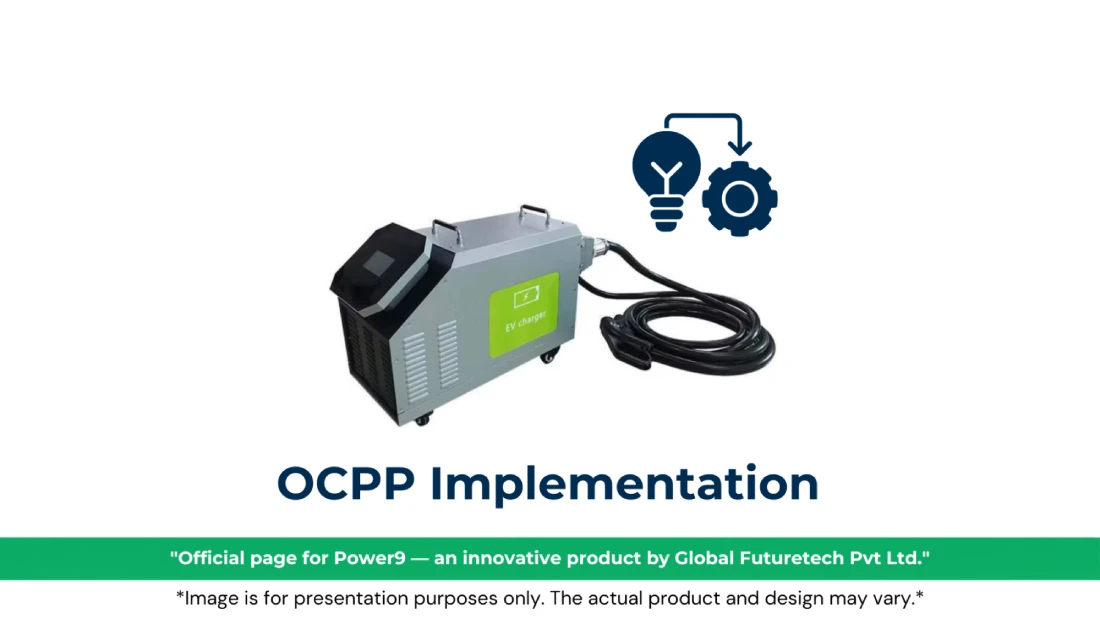
OCPP is a protocol for communication between compatible charging equipment and charging management platforms.
In its reports on it, India’s Ministry of Power say its charging infrastructure framework puts out a plan for a connected and interoperable network, also we see in government documents which protocols are to be open in the EV charging space.
But “OCPP supported” is too vague for procurement.
Ask EV charging hardware manufacturers:
Which OCPP version?
Which functions are implemented?
Can the charger work with third-party charging-management systems?
Can the owner change backend providers?
What happens when backend communication is unavailable?
How are faults diagnosed?
How are firmware updates handled?
The answers matter more than simply seeing the OCPP logo on a datasheet.
11. Display and Human-Machine Interface
The display is often the part users notice first.
Yet it is also a potential point of failure.
Depending on charger design, the interface may show:
charging state,
energy delivered,
session time,
authentication instructions,
voltage,
current,
and fault information.
For EV charging system manufacturers, display choice needs to account for actual environmental exposure and operating conditions.
A fleet depot may not need the same interface design as a public commercial station.
Reliability should be evaluated in relation to the intended use.
12. Authentication Hardware

Many commercial chargers use RFID, NFC, QR codes, mobile apps or backend authorization for access.
We see that if the authentication layer fails out a technically sound charger may still go out of service for the intended user.
This means that as buyers evaluate EV charging hardware manufacturers they should ask about primary and also backup access methods.
Can authorised users charge if internet access is temporarily lost?
What happens when the RFID reader fails?
Can another authentication method be used?
How is user access managed?
The stronger the operational requirement, the more important this becomes.
13. Energy Metering
Energy measurement can support:
session monitoring,
fleet reporting,
charging analytics,
and, where applicable, billing functions.
Procurement teams should put to EV charging system manufacturers what is the method of energy data measurement, display and communication.
If a company puts forth a certain level of metering accuracy or that they are fit for commercial billing the procurement team should request proof of that claim.
Power9 and other manufacturers should stay away from putting out unsupported claims like “revenue-grade metering” until it is backed by appropriate technical evidence.
This is an E-E-A-T issue as much as a technical one.
14. Component Quality Is Not Enough
A common procurement question is:
“Which component brands are inside the charger?”
That can be useful, but it does not tell the whole story.
Even premium components can perform poorly in an inadequately engineered system.
Reliability depends on:
correct component rating,
PCB and electrical design,
thermal margins,
wiring,
firmware,
protection logic,
manufacturing quality,
installation,
and operating environment.
Good EV charging hardware manufacturers therefore engineer the complete system instead of simply assembling well-known components.
This is why buying decisions should be based on the finished product architecture.
15. Design Margin and Derating
Every electrical component has limits.
Operating continuously near a component’s maximum electrical or thermal limit may affect long-term reliability depending on its design and specifications.
Experienced EV charging system manufacturers therefore consider appropriate engineering margins.
B2B buyers can ask:
How does the charger behave at full load?
Does it operate continuously at rated power?
Under what conditions does it reduce output?
How is high ambient temperature handled?
What happens if internal temperatures exceed defined limits?
These questions are especially useful when comparing chargers intended for demanding commercial applications.
16. Manufacturing Quality Control

Good charger design needs consistent manufacturing.
A well-engineered product can still develop reliability problems if assembly quality varies from unit to unit.
This makes factory quality control an important differentiator among EV charging hardware manufacturers.
Depending on product design, routine production checks may include:
wiring inspection,
terminal verification,
electrical checks,
firmware verification,
communication testing,
authentication testing,
functional charging tests,
and final visual inspection.
The exact Power9 production and QC sequence should be published only after confirmation from the Power9 engineering team.
Power9 manufacturing QC process: [ENGINEERING TEAM TO CONFIRM].
That is preferable to inventing a process for SEO.
17. Type Testing vs Production Testing
Businesses should understand that type/product validation and routine factory testing are not necessarily the same thing.
Product validation examines whether the charger design meets defined technical requirements.
Production testing helps verify the individual manufactured unit before dispatch.
When evaluating EV charging system manufacturers, ask:
What validation has the product undergone?
What checks occur on every charger?
Which checks are sample-based?
Are results recorded?
Can a manufactured charger be traced to its test record?
This type of manufacturing transparency is especially useful for serious B2B buyers.
18. Remote Diagnostics
Preventing every failure is impossible.
Fast diagnosis is therefore one of the strongest contributors to real-world uptime.
A connected charger can potentially provide diagnostic information including:
fault codes,
temperature information,
communication status,
charging-session information,
and component alerts.
When comparing EV charging hardware manufacturers, see what data their technical support teams have access to remotely.
A company which is able to identify a fault and repair it remotely may greatly reduce down time.
This is particularly important for geographically distributed charging networks.
19. Field Serviceability
Imagine two chargers experience the same internal component fault.
Charger A can be repaired onsite in one hour.
Charger B needs to be removed and transported for factory repair.
The underlying failure may be identical, but the operational impact is completely different.
This is why professional EV charging system manufacturers should design serviceability into the product where practical.
Ask:
Which components are field replaceable?
Are diagnostic procedures available?
Is technician training provided?
Do replacement components require special configuration?
Are spare parts stocked?
Can the charger return to service immediately after replacement?
For B2B operators, recovery time matters.
20. Spare-Parts Availability
A charger may remain installed for years.
Procurement teams therefore need to understand what happens when parts are required later.
Ask EV charging hardware manufacturers about availability of:
connectors,
charging cables,
displays,
controller boards,
contactors,
communication modules,
fans,
sensors,
and DC power modules where applicable.
The exact list depends on the charger architecture.
The question is not whether every component will fail.
It is whether the manufacturer has a practical lifecycle-support strategy if one does.
Reliability vs Uptime: They Are Related, but Not Identical
This is an important distinction for B2B buyers.
Reliability concerns how consistently the charger performs without failure.
Uptime concerns how much of the time the charger remains available for use.
A charger can experience a failure but still maintain strong overall uptime if the problem is detected and resolved rapidly.
Therefore, the strongest EV charging system manufacturers should work on both:
Failure Prevention
Good design, quality components, thermal management, protection and manufacturing QC.
Fast Recovery
Diagnostics, modular serviceability, spare parts, trained technicians and technical escalation.
For fleets and charging operators, this complete model is more useful than the claim:
“Our charger is highly reliable.”
EV Charger Reliability Procurement Matrix
|
Technical Area |
Questions for Manufacturer |
|
Power modules |
Modular? Replaceable? Thermal monitoring? |
|
Contactors |
Appropriate voltage/current/duty rating? |
|
Sensors |
Fault detection and diagnostics? |
|
Controller |
Firmware ownership and logging? |
|
Protection |
How does each fault trigger system response? |
|
Cable/connector |
Rating, service life and replacement? |
|
Cooling |
Temperature sensing, fans and derating? |
|
Enclosure |
IP/IK and environmental suitability? |
|
Communication |
4G/Wi-Fi/LAN failure behaviour? |
|
OCPP |
Version and CMS interoperability? |
|
Display |
Replaceable and environment appropriate? |
|
Authentication |
Backup access if primary method fails? |
|
Manufacturing |
What checks occur before dispatch? |
|
Diagnostics |
What can be identified remotely? |
|
Serviceability |
What can be repaired onsite? |
|
Spare parts |
Availability and support period? |
|
Warranty |
Coverage, exclusions and escalation? |
Using this matrix gives businesses a stronger basis for comparing EV charging hardware manufacturers than relying on a simple feature sheet.
Where Power-9 Fits Into EV Charging Hardware
Power9 is the EV charging division of Global Futuretech Private Limited.
At present they have a range which includes connected AC and DC charging solutions for various charging needs.
Power9’s AC platform is built out of a dual gun which in turn supports at the same time the charge of two compatible EVs.
For its DC platform they have introduced selectable 20/30 kW options which play to applications where vehicle turn around is key.
As you compare Power9 with other EV charging hardware manufacturers do so by the same engineering principles which we discussed above.
Customers should be able to assess:
technical specifications,
vehicle compatibility,
protection,
communication,
operating environment,
firmware,
installation requirements,
warranty,
serviceability,
and support.
Power9 should also continue strengthening first-party manufacturing evidence from the Global Futuretech Private Limited works at Dadra.
Real evidence will create more trust than simply saying the company uses “best-in-class components.”
How Power9 Can Build Stronger Hardware E-E-A-T
For this topic, Power9 has an opportunity to publish information competitors may not make easily available.
The website could eventually show:
real charger-internal photography where commercially appropriate,
actual assembly workflow,
testing equipment,
routine production checks,
quality-control documentation,
technical team profiles,
repair/service process,
product revision information,
and spare-parts support.
Any technical detail should be reviewed and approved by Power9’s engineering team before publication.
This can turn a generic manufacturer’s website into a genuine technical resource.
It can also strengthen Google’s and AI systems’ understanding of Power9 as a hardware-manufacturing entity.
AEO and GEO Opportunity: Give Search Engines Facts They Can Cite
Consider these two statements:
“Power9 manufactures advanced, reliable EV chargers.”
and:
“Power9’s verified production process includes [specific test], [specific test], and [specific test], with [verified diagnostic/service capability].”
The first statement is marketing.
The second contains facts.
AI answer engines need the second type of information.
For GEO, Power9 should gradually establish a factual entity relationship:
Power9
→ Global Futuretech Private Limited
→ Dadra Works
→ EV Charging Hardware
→ AC EVSE
→ DC EVSE
→ Engineering
→ Manufacturing
→ Quality Control
→ Product Testing
→ Commercial / Fleet Applications
This is far more defensible than simply increasing the density of EV charging hardware manufacturers across several generic blogs.
Frequently Asked Questions
1. What are the main components inside an EV charger?
An EV charge station includes contactors, controllers, sensors, protection devices, metering, communication hardware, authentication systems, charging cables and connectors. Also included in DC fast chargers is more in depth thermal management and power conversion equipment. The structure of the charging hardware’s architecture is different between EV charging hardware manufacturers and what model you have.
2. What determines EV charger reliability?
Reliability is a result of good electrical design, proper rated components, thermal management, protection architecture, firmware, manufacturing quality, installation quality and operating conditions. Large EV charging system manufacturers integrate these elements into one system which they see as a whole rather than separate components.
3. What is the most important component in a DC fast charger?
There is no one element which determines reliability. In DC charge power conversion modules are key but also it is controllers, switching devices, sensing, protection, thermal management, communication and firmware which must all work together.
4. Why is thermal management important for EV charging hardware?
Power electronics generate heat, which in turn affects performance and component life at high levels. In the case of EV charging hardware manufacturers we see that they require appropriate cooling, temperature monitoring, derating and protection strategies which in fact will be based on the charger architecture and intended operating environment.
5. What is IS 17017 Part 23:2026?
In 2023 the standards were updated for Indian conditions which include requirements for DC EVSE regarding communication, protection, cables and related safety issues.
6. Why does BIS use a 55°C ambient test condition for the revised DC EVSE standard?
BIS reports that in the 2026 revision they raised the ambient test temperature which was at 40°C in the IEC document to 55°Cto account for Indian conditions. This is of particular relevance when we compare EV charging system manufacturers for installations in India.
7. Does a higher IP rating mean a more reliable charger?
Not by itself. An IP rating only describes how well an enclosure resists specified ingress. A product’s reliability also hinges on its electrical design, heat control, component quality, firmware, installation, and maintenance.
8. Why does OCPP matter when comparing charging hardware?
OCPP enables compatible charging equipment to connect with charging management systems. For specific information related to what exactly is supported, interoperability issues, backend requirements and fault handling behavior which is what businesses are after, we recommend that you ask EV charging hardware manufacturers for this detailed info rather than to go off of a generic “OCPP compatible” claim.
9. Are modular chargers more reliable?
Modulo that. Modular design which is what we see in some systems improves the ability to service components as they may be repaired or replaced independently. As for reliability that still is a function of component quality, electrical design, cooling, firmware and manufacturing. Modularity does improve what we see in terms of up time which in turn reduces repair time even if it does not change the chance of failure.
10. What should buyers ask about EV charger production testing?
During what tests does product validation take place and what checks are done on every production unit? EV charging system manufacturers should tell which is which between type/product testing and routine manufacturing quality control instead of saying all of it is “100% tested.
11. Why are spare parts important for commercial EV charging?
Commercial chargers may stay in service for years, so repairs can depend on whether compatible connectors, cables, power modules, controllers, fans, and other replacement parts are available. Check spare-parts planning before buying; it can determine how quickly a charger returns to operation and how much downtime it experiences.
12.How can a business compare EV charging hardware manufacturers?
Use a framework which includes product architecture, safety, thermal design, communication, OCPP, manufacturing quality control, diagnostics, serviceability, spare parts, warranty and lifecycle support. A comparison based only on charger power and purchase price is put forth by many but is in fact inadequate.
Conclusion
Reliable EV charging equipment is not created by one expensive component.
It comes from a complete engineering system.
Businesses looking at EV charging hardware manufacturers should look into how power conversion, contactors, sensing, controllers, protection, connectors, thermal management, communication, firmware, enclosure design and quality control play together.
And reliability is only half of the picture.
For B2B charging infrastructure, the ability to diagnose and resolve problems quickly can be just as important.
That means evaluating:
remote diagnostics
field serviceability
spare parts
technical escalation
firmware support
warranty
alongside the physical hardware.
The strongest EV charging system manufacturers should therefore be capable of answering two questions:
How have you designed this charger to reduce the chance of failure?
and
If a failure does happen, how quickly can you help us return the charger to service?
Those questions reveal far more than the charger’s headline kW rating.
For our Power9 products we see that which we put out there in terms of first party engineering, testing, quality control and service info can be a key differentiator in B2B purchase decisions and also for organic search.
Evaluating AC or DC charging hardware for a commercial, workplace or fleet project? Share your vehicles, charger requirement, utilisation pattern and site conditions with Power9 to discuss the appropriate charging system.
Reference Links
Only government or government-backed sources are included.
- Bureau of Indian Standards — IS 17017 Part 23:2026
Current BIS standard for DC Electric Vehicle Supply Equipment, including updated requirements for safety, communication, cables and Indian operating conditions. (Bureau of Indian Standards)
BIS – IS 17017 Part 23:2026 - NITI Aayog e-Amrit — BIS Standards for EV Charging
Government-backed explanation of IS 17017 and Indian AC/DC EVSE standards. (e-AMRIT)
NITI Aayog e-Amrit – BIS Standards - NITI Aayog e-Amrit — Standards and Specifications
Government-backed overview of AC/DC charging categories and technical specifications. (e-AMRIT)
NITI Aayog e-Amrit – Standards and Specifications - Ministry of Power — EV Charging Infrastructure Guidelines 2024
Current framework for safe, reliable and accessible charging infrastructure. (Power Ministry of India)
Ministry of Power – EV Charging Infrastructure Guidelines - Ministry of Heavy Industries / PIB — Charging Stations for Electric Vehicles, July 2026
Official update reporting 52,718 public charging stations, including 16,561 equipped with fast chargers for cars. (Press Information Bureau)
PIB – Charging Stations for Electric Vehicles - Ministry of Heavy Industries / PIB — PM E-DRIVE EVPCS Allocation
Official confirmation of the ₹2,000 crore allocation for EV public charging infrastructure. (Press Information Bureau)
PIB – PM E-DRIVE Charging Infrastructure Allocation